Digital Taranjit Kaur

digitaltaranjitkaur@gmail.com

What Is a Digital Marketing Course? A Complete Guide for Beginners

The way businesses attract customers has changed dramatically. A potential customer may discover a company through Google, watch its Instagram Reel, click a paid advertisement, read a blog, visit its website and eventually contact the business through WhatsApp—all before making a purchase. This shift has created a growing need for people who understand how different digital channels work together. That is where a digital marketing course comes into the picture. A digital marketing course is more than learning how to post on social media or create an advertisement. A comprehensive program can introduce learners to search engine optimization (SEO), Google Ads, Meta Ads, social media marketing, content marketing, email marketing, analytics, websites, lead generation and performance marketing. For students, fresh graduates, working professionals, entrepreneurs and aspiring freelancers, structured digital marketing training can provide a way to understand these different disciplines systematically. But what exactly does a digital marketing course teach? How long does one take? Is certification important? Can it lead to a job or freelancing opportunity? And what should you look for before enrolling? This guide explores these questions and explains what learners should realistically expect from digital marketing education. What Is a Digital Marketing Course? A digital marketing course is a structured learning program that teaches individuals how businesses promote products, services and brands through online channels such as search engines, websites, social media, email and digital advertising. In simple terms, digital marketing is the discipline, while a digital marketing course is one way of learning that discipline. Instead of learning every marketing skill separately, a comprehensive course can introduce learners to several connected areas. These may include SEO, paid advertising, social media, content, analytics, websites and lead generation. However, not every program is identical. Courses differ in: A short course might focus on the fundamentals, while a comprehensive digital marketing training program could cover several channels in greater depth. The important question, therefore, is not simply “Is this a digital marketing course?” but rather “What will I actually learn and practice?” Why Do People Take a Digital Marketing Course? People enter digital marketing education for very different reasons. Someone starting their first career may have completely different objectives from an entrepreneur who wants to promote an existing business. 1. To Build a Career Digital marketing includes multiple specializations, creating potential career paths in SEO, paid advertising, social media, content, analytics and other areas. A learner can start with broad fundamentals and later specialize in an area that matches their interests. 2. To Change Careers Working professionals sometimes explore digital marketing when considering a career transition. Structured learning can provide an organized introduction to concepts that might otherwise take considerable time to learn independently. 3. To Start Freelancing Digital marketing skills can also be offered as freelance services. For example, a freelancer might specialize in SEO, social media management, Google Ads, content creation or local SEO. However, learning the technical skill is only one part of freelancing. Client communication, proposals, pricing, reporting, portfolio development and business development matter too. 4. To Grow a Business Entrepreneurs may take digital marketing classes to better understand how their own businesses acquire customers online. They may not intend to become full-time marketers. Instead, they may want to understand advertising reports, SEO, social media strategy, lead generation and customer acquisition well enough to make informed decisions. 5. To Build Practical Skills Digital marketing can complement existing professions. A designer who understands marketing can create more conversion-focused creative work. A content writer who understands SEO can produce search-focused content. A salesperson who understands digital lead generation can better understand where prospects come from. 6. To Understand Modern Customer Journeys Customers rarely follow a single path. Someone might see a social media post, search the company on Google, visit its website and return through a remarketing advertisement. Learning digital marketing helps students understand how these touchpoints connect. What Do You Learn in a Digital Marketing Course? The exact digital marketing course syllabus varies from one provider to another. However, a comprehensive program may cover several major areas. SEO Search engine optimization helps businesses improve their visibility in organic search results. A learner may study: For example, someone learning SEO might start with a business’s target audience, identify relevant search queries, optimize website pages and then monitor how organic visibility changes. SEO is not simply about inserting keywords into an article. It involves understanding what users are searching for and creating useful, accessible information that serves that intent. Google Ads A Google Ads course may introduce learners to paid search advertising and other advertising formats. Topics can include: The goal is to understand how paid advertising connects audience intent with business objectives. Meta Ads Meta advertising generally involves platforms such as Facebook and Instagram. Learners may explore: The practical challenge is not merely creating an advertisement. It is understanding who should see it, what message they should receive and what action the business wants them to take. Social Media Marketing A social media marketing course may cover: A social media manager needs to think beyond individual posts. The larger question is: What role does social media play in the overall marketing strategy? Content Marketing Content marketing focuses on using useful information to attract and engage an audience. Learners may work with: The objective is not simply to produce more content. Good content should have a purpose and provide value to its intended audience. Email Marketing Email remains useful for communication and lead nurturing. Training may cover: Website Basics Digital marketers benefit from understanding how websites work because many marketing campaigns ultimately lead users to a website or landing page. A course may introduce: Analytics Marketing without measurement can become guesswork. Students may learn how to examine: Analytics helps answer questions such as: What happened? Why might it have happened? What should we change next? Performance Marketing Performance marketing emphasizes measurable outcomes. Depending on the business, those outcomes might include: Common metrics include CPL (cost per lead), CPA (cost per acquisition), conversion rate and ROAS (return

What Is a Digital Marketing Course? A Complete Guide for Beginners Read More »
AI In Digital Marketing

AI in Digital Marketing: How Artificial Intelligence Is Transforming the Future of Marketing Digital marketing has always been closely connected with technology. From search engines and social media to analytics platforms and automated advertising, every major technological shift has changed how businesses attract and communicate with customers. Artificial intelligence is now accelerating that change. For years, marketers depended heavily on manual keyword research, spreadsheets, audience segmentation, campaign analysis, content planning and repetitive optimization tasks. Today, AI can help process enormous amounts of information, identify patterns, generate ideas, personalize experiences and support decisions in a fraction of the time. But AI in digital marketing is not simply about asking a chatbot to write a social media post or generate a blog article. Its impact is much broader. Artificial intelligence is becoming part of SEO, paid advertising, content strategy, customer experience, analytics, automation and search itself. At the same time, businesses face an important question: how much of marketing should be automated, and where should human judgment remain central? The answer is becoming clearer. The future of marketing is unlikely to be purely human or purely AI-driven. Instead, successful marketers will increasingly combine artificial intelligence with creativity, strategic thinking, customer understanding and original expertise. What Is AI in Digital Marketing? AI in digital marketing refers to the use of artificial intelligence technologies to perform, support or improve marketing activities. In simple terms, AI allows software to analyze information, recognize patterns, make predictions, understand language and generate content or recommendations based on data. Several AI technologies are particularly relevant to marketing. Machine Learning Machine learning allows systems to identify patterns from data and improve predictions over time. For example, an advertising platform can analyze previous campaign signals to estimate which audiences, placements or users are more likely to respond to an advertisement. Predictive Analytics Predictive analytics uses historical and current information to estimate what may happen next. A marketer might use predictive models to identify customers who are more likely to purchase, churn or respond to a particular offer. Natural Language Processing Natural language processing enables computers to understand and work with human language. It has applications in search, chatbots, sentiment analysis, customer support, keyword analysis and conversational marketing. Generative AI Generative AI can create new content such as text, images, videos, ideas and other creative assets. For marketers, this can support brainstorming, content development, ad variations, research and repurposing. Recommendation Systems Recommendation systems analyze user behavior and preferences to suggest relevant products, content or experiences. These technologies are already familiar to consumers through personalized feeds, shopping recommendations and streaming platforms. The important point is that AI does not represent one single marketing tool. It is an expanding collection of technologies that can influence almost every stage of the customer journey. Why Is AI Becoming Important in Digital Marketing? The increasing importance of AI is closely connected to the amount of information modern businesses generate. A company may have data from its website, Google Ads campaigns, social media accounts, CRM, email marketing, customer interactions and sales systems. Analyzing all of that manually can be difficult and time-consuming. AI can help marketers process this information and identify patterns that may otherwise be difficult to notice. 1. Increasing Data Volume Every digital interaction can generate information. Businesses can collect signals related to: AI can help organize and interpret these large datasets. 2. Greater Personalization Customers increasingly expect experiences that are relevant to their interests. AI can help businesses segment audiences and deliver different messages based on behavior, preferences and interactions. 3. Faster Marketing Execution Research, brainstorming, reporting and content production can consume significant amounts of time. AI can assist with repetitive tasks, allowing marketers to spend more time on strategy and creative decision-making. 4. Better Decision Support AI-powered analytics can reveal patterns and correlations that support marketing decisions. Instead of relying exclusively on assumptions, marketers can use data-driven insights to evaluate opportunities. 5. Automation Marketing automation is not new, but AI is making automation more adaptive. Instead of simply following a fixed rule, an AI-powered system may use multiple signals to determine what action is most appropriate. 6. Changing Search Behavior Search is also evolving. Google now provides AI-powered experiences such as AI Overviews and AI Mode, where users can ask more complex questions and receive synthesized responses with links to supporting sources. Google says that the fundamentals remain important: websites should provide unique, satisfying content, maintain a good page experience and ensure their content can be crawled and indexed. This means marketers need to think beyond traditional keyword rankings and consider how useful their content is throughout the wider search journey. How AI Is Transforming SEO Search engine optimization is one of the areas most affected by AI. Traditional SEO involved extensive manual research, including keyword discovery, competitor analysis, content planning and technical audits. AI can now assist with many of these processes. AI can support: However, there is an important distinction between using AI to improve SEO and using AI to mass-produce SEO content. The second approach can create serious problems. Google’s current guidance states that generative AI can be useful for research and structuring original content, but generating many pages without adding value can fall under its scaled content abuse policies. Google emphasizes accuracy, quality and relevance. Therefore, a sensible SEO workflow looks more like: AI assistance + human expertise + original research + fact checking + useful content rather than: AI generation + automatic publishing + keyword stuffing AI can help identify what people are searching for, but it does not automatically understand a company’s unique experience, customers or competitive advantage. That remains a human responsibility. The growing importance of first-hand experience, originality, accuracy, topical relevance and trustworthy information also means that simply producing more content is not necessarily a sustainable SEO strategy. AI and the Rise of AI Search Search engines are becoming increasingly conversational. Instead of searching for something like: “best digital marketing agency Mumbai” a user might ask: “What should a small Mumbai business look for when

AI In Digital Marketing Read More »

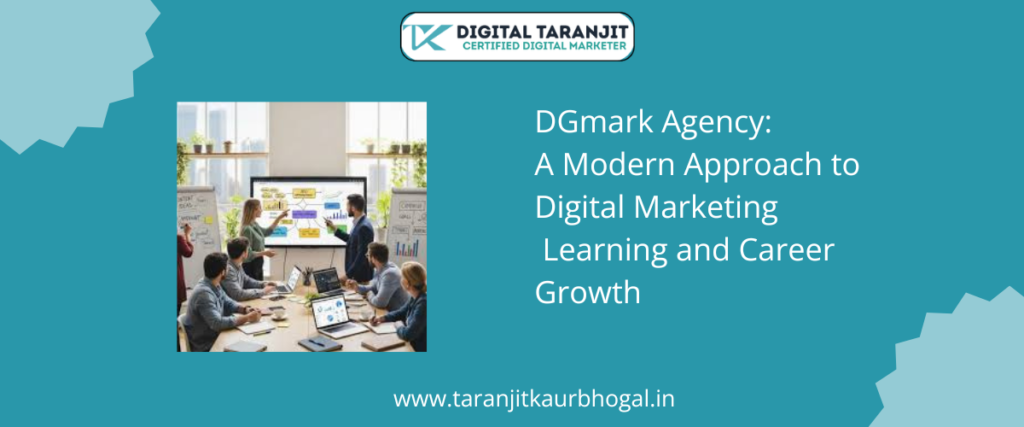
DGmark Agency: A Modern Approach to Digital Marketing Learning and Career Growth

Introduction Over the past decade, digital marketing has evolved from a niche skill into a core requirement for businesses across industries. From startups and local brands to global corporations, companies increasingly rely on online platforms to reach their customers. As a result, the demand for skilled digital marketers continues to grow rapidly. However, learning digital marketing is not just about understanding theory. The industry changes frequently, and practical exposure plays a crucial role in helping individuals build real-world marketing skills. Because of this, many students, professionals, freelancers, and entrepreneurs are now looking for training institutes that focus on practical learning rather than only classroom concepts. In this context, institutes such as DGmark Agency have started gaining attention for their approach to digital marketing training. By combining structured learning with practical exposure, they aim to help learners understand how digital marketing works in real business environments. The Rising Demand for Digital Marketing Skills The digital economy has created new career opportunities across multiple sectors. Businesses today rely heavily on digital platforms such as search engines, social media, and online advertising to connect with their audience. As a result, companies constantly look for professionals who understand how to manage online visibility, customer engagement, and digital campaigns. This demand has led to a significant increase in interest in digital marketing courses. Students completing their education often explore digital marketing as a career path because it offers diverse roles such as SEO specialist, content marketer, social media strategist, and performance marketing analyst. Working professionals are also entering this field to upgrade their skill sets and stay competitive in the evolving job market. Entrepreneurs and small business owners, on the other hand, seek digital marketing training to promote their businesses online without depending entirely on external agencies. Because of this shift, digital marketing institutes are playing an important role in preparing individuals for the industry. Why Practical Digital Marketing Learning Matters Digital marketing is a field that cannot be mastered through theory alone. Understanding marketing concepts is important, but applying them through practical work is what truly builds expertise. For example, learning about search engine optimization in theory may explain how websites rank on search engines. However, the real learning begins when a student actually works on keyword research, content optimization, and website analytics. Similarly, running social media campaigns or paid advertisements requires hands-on experience with platforms and data analysis. This is why many learners today prefer digital marketing institutes that focus on practical digital marketing learning. Practical exposure allows students to understand real campaign structures, analyze performance data, and learn how to adjust strategies based on results. Institutes that combine classroom teaching with real-world projects help learners develop confidence and industry-ready skills. This approach also makes it easier for students to transition from learning to working in the digital marketing industry. A Closer Look at DGmark Agency’s Learning Approach While exploring different digital marketing institutes, DGmark Agency appears to follow a model that aligns with current industry needs. Rather than focusing solely on theoretical modules, the institute integrates practical learning into its training structure. Through its platform (https://dgmarkagency.com), the agency highlights a curriculum designed to give learners exposure to real-world marketing scenarios. This includes areas such as SEO, social media marketing, website development, and paid advertising What stands out is the emphasis on applying concepts during the learning process. Students are encouraged to work on projects, which can help them build a portfolio—an important asset when entering the job market or starting freelance work. Additionally, institutes like DGmark Agency often bridge the gap between learning and execution by guiding students on how to implement strategies for businesses. This approach can be particularly useful for entrepreneurs who want to manage their own marketing efforts. How DGmark Agency Contributes to Industry-Ready Professionals Among the various digital marketing training institutes emerging in recent years, DGmark Agency has built its identity around practical learning and industry-focused training. Instead of focusing only on theoretical explanations, the institute emphasizes real-world application of digital marketing concepts. The idea behind this approach is to prepare learners for the challenges they may face in actual marketing roles. By understanding how campaigns are planned, executed, and optimized, students can gain insights that are difficult to obtain from textbooks alone. Through its training programs, DGmark Agency introduces learners to different areas of digital marketing, including search engine optimization, social media marketing, performance marketing, and content strategy. These areas collectively form the foundation of most digital marketing roles in the industry. For individuals exploring the institute and its programs, more information about its training structure and offerings can be found on the official website:https://dgmarkagency.com Key Features of Modern Digital Marketing Training Institutes Digital marketing education has changed significantly over the years. Traditional classroom-style teaching is gradually being replaced with more interactive and practical learning methods. Modern digital marketing institutes typically focus on several important aspects. 1. Hands-On Projects Practical assignments and live projects help students apply what they learn in real scenarios. These projects allow learners to work on campaign planning, keyword research, ad creation, and performance tracking. 2. Exposure to Industry Tools Digital marketing relies heavily on various tools for analytics, keyword research, and campaign management. Modern institutes introduce students to commonly used tools so that they become familiar with the technology used in the industry. 3. Updated Curriculum Because digital marketing platforms and algorithms change frequently, an updated curriculum is essential. Training institutes that regularly revise their course structure help students stay aligned with current industry trends. 4. Career Guidance Another important feature is career guidance. Many students entering digital marketing training are unsure about which specialization to pursue. Institutes often provide guidance about different roles and career paths within the industry. Institutes like DGmark Agency represent this evolving approach to digital marketing education, where learning focuses on both conceptual understanding and practical experience. Career Opportunities After Learning Digital Marketing One of the main reasons people explore a career in digital marketing is the variety of opportunities available in the field. Unlike many

DGmark Agency: A Modern Approach to Digital Marketing Learning and Career Growth Read More »

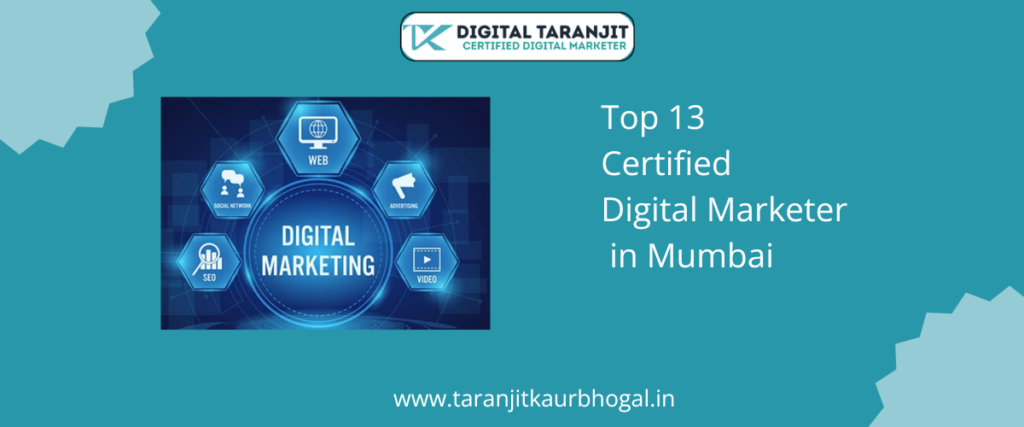
Top 13 Certified Digital Marketer in Mumbai

Digital marketing refers to the use of online platforms, digital technologies, and internet-based channels to promote products, services, or brands to a targeted audience. It includes strategies such as Search Engine Optimization (SEO), social media marketing, content marketing, email marketing, and paid advertising through platforms like Google and social media networks. Digital marketing helps businesses increase their online visibility, attract potential customers, and build strong relationships with their audience. By using data-driven insights and analytics, businesses can measure performance, optimize campaigns, and achieve better results. It is an essential approach for modern businesses to grow, compete, and reach customers effectively in the digital world. 1. Digital Taranjit Kaur Taranjit Kaur is a certified digital marketer based in Borivali and trained at DGmark Institute. I specialize in creating result-driven digital marketing strategies that help businesses build a powerful online presence and achieve sustainable growth. My expertise includes SEO to improve Google rankings, user-friendly website development, social media management, and high-converting Google and Meta ad campaigns. I work closely with startups, small businesses, and professionals to simplify digital marketing, attract the right audience, and generate consistent leads and measurable business results. Email: digitaltaranjitkaur@gmail.com Website: taranjitkaurbhogal.in Contact: 7045386302 2. Digital Pratham Pugalia Pratham Pugalia is a Mumbai-based all-round digital marketer known for delivering creative and result-driven online growth strategies. He specializes in SEO, social media marketing, performance advertising, content strategy, branding, and e-commerce marketing. With a strong understanding of the digital landscape, he helps businesses build powerful online visibility, attract the right audience, and convert engagement into real growth. Through a mix of data-driven insights and innovative marketing techniques, Digital Pratham Pugalia supports brands in scaling their digital presence and achieving measurable success in today’s competitive market. Email :- digitalprathampugalia@gmail.com Website:- prathampugalia.in Contact :- 9820568002 3. Digital Krupa Gharat Digital Krupa Gharat is a certified digital marketer driven by a passion for transforming brands into powerful digital narratives. With a keen understanding of SEO, social media strategy, content marketing, and data-driven campaigns, she crafts impactful online experiences that elevate brand visibility and engagement. Her analytical mindset, combined with creative insight, enables her to decode market trends and deliver strategic solutions. Krupa thrives in the dynamic digital landscape, consistently leveraging innovative tools and marketing intelligence to help businesses grow, connect, and leave a lasting digital imprint. Email:- digitalkrupagharat@gmail.com Website:- krupagharat.in Contact:- 9766305707 4. Digital Jaya Pande Jaya Pande is a passionate digital marketer who helps businesses grow their online presence through effective digital strategies. She specialize in social media marketing, search engine optimization (SEO), content marketing, and online advertising. Her goal is to create engaging content and data-driven campaigns that connect brands with the right audience. She enjoys learning new digital trends and continuously improving strategies to help businesses increase visibility, engagement, and conversions in the competitive online marketplace. Email: digitaljayapande@gmail.com Website: jayapande.in Contact: 8433693350 5. Digital Jayesh Patel Digital Jayesh Patel provides professional digital marketing services to help businesses grow online. We specialize in social media marketing, website promotion, SEO, lead generation, and online branding. Our goal is to increase your brand visibility, attract more customers, and boost sales through effective digital strategies. Whether you are a small business or a growing company, Digital Jayesh Patel offers reliable and result-driven marketing solutions tailored to your needs in today’s competitive digital world. Email:- digitaljayeshpatel@gmail.com Website:- jayeshp.in Contact:- 9136364332 6. Digital Diya Doshi Diya Doshi Digital Marketing Services, based in Mumbai, online presence through creative and result-driven strategies. We specialize in social media marketing, content creation, branding, and digital promotions to connect brands with the right audience. Our focus is on increasing engagement, improving brand visibility, and helping businesses grow online. With fresh ideas and a modern digital approach, Diya Doshi Digital Marketing Services supports startups and local businesses in Mumbai to stand out and succeed in today’s competitive digital world. Email: digitaldiyadoshi@gmail.com Website: diyadoshi.in Contact: 9172958675 7. Digital Nishi Gandhi Nishi Gandhi is a creative designer and digital marketing enthusiast focused on building impactful visual identities and meaningful brand experiences. With a strong understanding of design strategy and digital platforms, Nishi blends creative thinking with data-driven marketing to help brands strengthen their online presence and connect with the right audience.From brand identity design and social media creatives to content strategy and digital campaigns, Nishi crafts visuals that not only look compelling but also communicate a clear message. Her approach combines design aesthetics, storytelling, and marketing insight to create work that enhances visibility, engagement, and brand recall.Through thoughtful design and strategic execution, Nishi Gandhi aims to transform ideas into powerful visual narratives that help brands stand out in the digital space. Email : digitalnishigandhi@gmail.com Website: nishigandhi.in Contact: +91 9987052997 8. Digital Chetan Choudhary Digital Chetan Choudhary is a dedicated digital marketing professional offering result- driven online marketing services to help businesses grow in the digital world. Withexpertise in SEO, social media marketing, Google Ads, and content strategy, he helps brands increase their online visibility, generate quality leads, and improve sales. His data-driven approach and creative strategies ensure effective campaigns that deliver measurable results. Whether for startups or established businesses, Digital Chetan Choudhary provides reliable digital marketing solutions for sustainable online growth. Email: digitalchetanchoudhary@gmail.com Website: chetanchoudhary.in Contact: 9372238645 9. Smoke Pipe Media Smoke Pipe Media is a creative digital marketing agency focused on helping brands grow and stand out in the competitive online space. The company provides services such as social media management, content creation, digital advertising, search engine optimization (SEO), website development, and campaign strategy. Smoke Pipe Media also supports brand building through creative design, storytelling, and engaging marketing activities. By combining innovative ideas with data-driven strategies, the agency helps businesses strengthen their digital presence, reach the right audience, and achieve long-term brand growth. Email: KunalKatara50@gmail.com Website: smokepipemedia.com Contact: 9004729743 10. Digital Mahendra Patel Digital Mahendra Patel is a passionate digital creator who shares knowledge about technology, online earning, and digital marketing. He focuses on helping beginners understand digital tools, social media growth, and online business opportunities. Through simple tips, tutorials, and practical insights,

Top 13 Certified Digital Marketer in Mumbai Read More »